
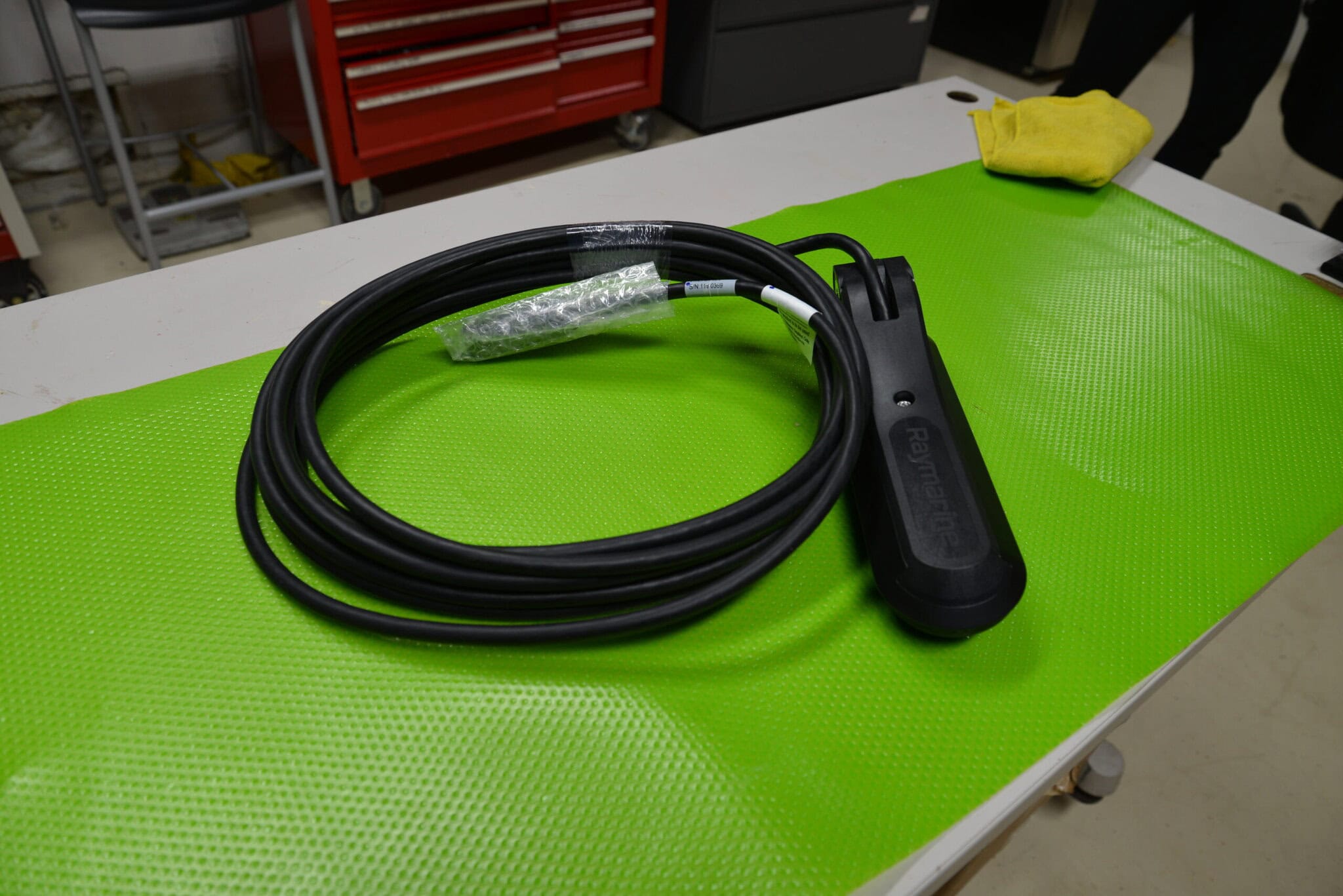
Marine Transducer Installation on Long Island
Your fish finder is only as good as your transducer installation. LIME installs marine transducers across Nassau and Suffolk County — transom mount, through-hull, and in-hull — with the correct angle, proper bedding, and clean cable runs every time.
A bad transducer mount causes interference, poor sonar images, and missed fish. Whether you are upgrading to CHIRP, adding side imaging, or replacing a failed unit, LIME makes sure the transducer performs exactly the way your display was designed to run it.

The Foundation of Your Sonar
What a marine transducer does and why installation matters.
A transducer is the underwater sensor that makes your fish finder, chartplotter depth reading, and speed log work. It converts electrical signals into sound waves, sends them through the hull and into the water, and receives the returning echoes. Your display processes those echoes into the depth readings, fish arches, and bottom contour you see on screen. Without a properly installed transducer, none of that information is accurate.
The angle of the transducer matters enormously. A transom-mount unit installed even a few degrees off loses significant sonar cone coverage. A through-hull installed without the proper deadrise angle for your specific hull shape produces noisy, distorted images. These are not things you can eyeball — they require knowing your hull geometry and how the transducer's beam pattern works.

Installation Options
Three transducer mounting types — and how to choose the right one.
The right mount depends on your hull material, engine type, and how the boat is used.

Transom Mount
The most common type on outboard and sterndrive boats. Mounts on the transom below the waterline. Easy to service and adjust. Best for most center consoles and runabouts on Long Island. Correct height and angle are critical.

Through-Hull
A fitting through the hull with the transducer face flush with the bottom of the boat. Best signal quality of any mount type. Required for inboard boats and preferred for serious offshore fishing. Requires proper bedding compound and hull angle calculations.

In-Hull (Shoot-Through)
Mounted inside the hull and shoots sonar through the fiberglass. No hole in the boat. Works on solid fiberglass hulls only — not cored or foam-filled hulls. Some signal loss compared to through-hull. Good option for boats where drilling is not preferred.
Sonar Technology
CHIRP sonar, side imaging, and down imaging — what each one does for you.
Traditional single-frequency sonar sends one pulse at one frequency. CHIRP (Compressed High-Intensity Radar Pulse) sweeps a range of frequencies in each pulse. The result is dramatically better target separation and bottom detail — especially at depth. If you are fishing for striped bass off Montauk, targeting tuna in the canyons, or bottom fishing the reefs and wrecks around Long Island, CHIRP is worth the upgrade.
Side imaging and down imaging are wide-angle sonar views that show you a photographic-quality image of what is beside and below the boat. These require specific transducer heads — typically a transom-mount or trolling motor mount unit with multiple sonar elements. LIME verifies which transducer is compatible with your specific display before installation and ensures the cable run is clean and interference-free.
Brands We Install
Marine transducer brands LIME works with on Long Island.
We install and configure transducers from these manufacturers and match each one to the correct display.
Garmin Transducers
GT series CHIRP transducers for Garmin GPSMAP and EchoMap displays. The GT54 and GT56 are popular on Long Island boats for their CHIRP sonar and side/down imaging in one unit.
Lowrance / Airmar
Lowrance Active Imaging and Airmar B60/B175 through-hull transducers for serious anglers. Airmar is the OEM behind many brand-name transducers and offers the best through-hull options for offshore boats.
Humminbird / Furuno
Humminbird MEGA Imaging transducers offer exceptional detail for their price point. Furuno requires brand-specific transducers — LIME handles compatibility verification for all Furuno installs.
Our Approach
What LIME does on a transducer installation.
Every transducer installation starts with a hull assessment. LIME evaluates your transom angle, hull deadrise, and the presence of strakes or hull features that affect transducer placement. We find the cleanest water flow location — away from turbulence created by strakes, steps, or through-hull fittings — so the transducer face gets clean water at speed.
For through-hull installations, we core the hole at the correct angle for your specific hull geometry, use proper marine bedding compound, and install a bronze or plastic sea cock depending on hull material. The cable is run cleanly to the display with no sharp bends that damage the cable over time. We test depth readings at dock and at speed before the job is complete.
- Hull geometry assessment before drilling
- Clean water flow location selection
- Proper bedding compound for through-hull installs
- Clean cable run to display — no sharp bends
- Depth and speed test at dock and underway

Matching Transducer and Display
Marine transducer installation starts with matching it to your display.
A transducer is only as good as the display it is paired with, and every brand does it a little differently. Before we order anything we check the transducer against your exact display, so the part we install actually works with it.
Garmin LiveScope
LiveScope needs a compatible GPSMAP chartplotter (9x3, 12x3 or ECHOMAP Ultra 2), the LiveScope transducer, and a mounting pole or trolling motor bracket, all tied into your NMEA 2000 network. We do the whole install, including on-water calibration to confirm the image is right.
Lowrance Active Imaging
The Active Imaging 3-in-1 transducer is an excellent value for inshore Long Island fishing, and Lowrance sonar networks easily with Simrad displays.
Humminbird MEGA Imaging
SOLIX and HELIX displays with MEGA Imaging give exceptional shallow-water detail, and they are popular on inshore and freshwater fishing boats.
Simrad and Raymarine sonar
Simrad ForwardScan sonar suits larger offshore and center console builds. Raymarine RealVision 3D sonar fits full-system builds where the display, radar and cameras all work together.
Furuno
Furuno needs brand-specific transducers, so we check compatibility on every Furuno install before anything is ordered. Furuno fish finders suit offshore boats that want professional-grade sonar.
Airmar
Airmar makes the transducer element inside nearly every major brand's fish finder. For custom or brand-agnostic sonar builds we install Airmar CHIRP transducers directly: in-hull, thru-hull or transom mount.
Replacing only the chartplotter? In most cases your existing transducer can stay, as long as it is compatible with the new display (same brand, or NMEA 2000 compatible). An older analog transducer may need an added module, and we walk you through the options before you buy anything. See chartplotter installation and Garmin installation.
Ready to talk? Or keep reading below.
One Trip, Done Right
Fish finder and transducer installation — done as one job.
Most transducer work happens because a new fish finder is going in. LIME handles the whole package in one visit: fish finder installation at the helm, the transducer mounted and bedded correctly below, and the two networked and calibrated before we leave the dock — depth offset, keel offset, and temperature reading verified on the water side.
Upgrading displays at the same time? We pair transducers with new chartplotter installations constantly — one wiring plan, one NMEA 2000 backbone, one clean helm instead of three separate jobs.
What Changes the Time
How long marine transducer installation takes, and what moves the cost.
We bill time and materials, so what you pay follows the work actually done. These are the things that change it:
- Mount type. Transom mount installations run 1 to 2 hours. Through-hull or in-hull installs take 3 to 5 hours depending on access.
- The cable run. The route from the transducer to the display, and how easy it is to get to, changes the time. We run the cable with no sharp bends.
- A new display at the same time. Most single-display fish finder jobs, with the transducer mounted, the cable run and the display wired at the helm, take one to two hours beyond the flat $280 first hour. That puts typical labor at roughly $420 to $560, depending on transducer type and how the cable has to route. A ballpark, billed on actual time.
- Several screens. One transducer can feed every display on the boat, helm, tower or cockpit, over NMEA 2000 or the maker's own network. That means a network to plan and install.
- Calibration. Before we call it done we check depth offset, keel offset and temperature on the water.
- Where the boat is. Travel up to 30 minutes each way is included in your first hour. Past that it is $40 per half hour per man, door to door. Sag Harbor is about 90 minutes each way from our Amityville base, and we give you that number before we book.
LIME supplies the transducer and every part we install, billed at cost plus markup, with a 60-day labor warranty and the manufacturer's warranty on the equipment. There is no 4-hour minimum. Rates are on our pricing page.
Related Jobs
Not sure the transducer is the problem, or the whole job?
Depth reading jumps or drops out
A bad reading is not always a bad transducer. A corroded ground, a damaged cable or a network fault can look exactly the same. We rule out the simple things first, then trace the signal to the exact part rather than swapping parts on a guess. See boat electronics repair.
Adding sonar to your boat
A new fish finder needs the right transducer under the boat. We specify the display and the transducer together and install them as a matched pair, networked and calibrated in one visit. See fish finder installation.
Upgrading to a new chartplotter
Putting in a new chartplotter? One wiring plan and one NMEA 2000 backbone beats three separate jobs, and the transducer placement is part of that plan. See chartplotter installation and NMEA 2000 installation.
Where We Install
Marine transducer installation on Long Island — Sag Harbor, Montauk and the whole shoreline.
We work on everything from compact inshore center consoles to offshore sportfishers. Jobs in our project gallery that included sonar or a depth sounder: a 62 ft Viking sportfisher in Lawrence, NY (a full Garmin package with cameras, sonar and radar, plus a custom panel); a 2004 Pursuit 3370 (chartplotter, autopilot and sonar on a Garmin NMEA 2000 network); a 2018 Tidewater 28 CC (Garmin GPSMAP and sonar with outboard integration); a 23 ft Sailfish center console (depth sounder and a trolling motor mount); and a Stratos 201 bass boat.
We come to your boat at your marina. Pick your harbor for local detail:
East End
North Shore
South Shore
Sag Harbor is one of the harbors we work in regularly. We run scheduled East End days during peak season, so call 516-448-6221 to confirm availability at your marina. Sending photos and your display model first helps us finish in one visit.
Why Long Island Boaters Trust LIME
5-Star Google Reviews
What Long Island boaters say about LIME.
★★★★★ Tommy C.
"On time. Knowledgeable. Dependable. Reasonable."
★★★★★ Adam R.
"David came on to my Boat and offered me several options and always leaned towards trying to save me the most money. His work was impeccable and delivered everything he said in a timely manner. if he says he will meet you at your boat at 8:30 then he is there at 8:29. In the boating world it is tough to find reliable people. He is a breath of fresh air."
★★★★★ AJ S.
"I had tried getting an appointment with several other companies, but could not get anyone to come down and take a look. When I contacted LIME I got Dave the owner on the phone and he was very knowledgeable. He was able to come out the same day I called to get an appointment and was able to diagnose the problem right away. I would absolutely use them again."
Common Questions
Frequently asked questions about marine transducer installation on Long Island.
What does a transducer do?A transducer converts electrical signals into sound waves and sends them into the water, then receives the returning echo to display depth, fish targets, and bottom structure on your fish finder or chartplotter. It is the hardware bridge between your display and the water below the boat.
A transducer converts electrical signals into sound waves and sends them into the water, then receives the returning echo to display depth, fish targets, and bottom structure on your fish finder or chartplotter. It is the hardware bridge between your display and the water below the boat.
What is the best transducer mounting for my boat?
Transom mount is the most common for outboard boats and easiest to install. Through-hull gives the best signal quality and is ideal for inboard or twin-engine boats. In-hull (shoot-through) works on fiberglass hulls and eliminates any hole in the boat. LIME recommends the right type based on your hull, engine, and how you use the boat.
Can I install a transducer myself?
Transom mounts are DIY-possible, but through-hull installations require proper bedding compound, hull angle, and a clean internal run. Wrong angle or poor sealing causes bad sonar performance and potential leaks. LIME does it right the first time.
What is CHIRP sonar and do I need it?
CHIRP (Compressed High-Intensity Radar Pulse) sonar transmits a range of frequencies rather than a single frequency. The result is significantly better target separation and detail — especially at depth. If you are fishing for stripers, blues, or tuna off Long Island, CHIRP is worth it.
Will my transducer work with my existing fish finder?
It depends on the connector type and frequency compatibility. Garmin, Lowrance, Humminbird, and Furuno each use different connectors and support different transducer models. LIME verifies compatibility before ordering and installs only what works with your display.
How long does transducer installation take?
Transom mount installations run 1 to 2 hours. Through-hull or in-hull installs take 3 to 5 hours depending on access. LIME charges $280 for the first hour (travel included), then $140/hr, and gives you fair pricing up front before starting.
Can I keep my old transducer when I get a new chartplotter?
In most cases yes. If your existing transducer is compatible with the new display (same brand, or NMEA 2000 compatible), we can connect it. If it is an older analog transducer, we may need to add a module. We walk you through the options before you buy anything.
Do you install Garmin LiveScope transducers?
Yes. LiveScope needs a compatible GPSMAP chartplotter (9x3, 12x3 or ECHOMAP Ultra 2), the LiveScope transducer, a mounting pole or trolling motor bracket, and NMEA 2000 network integration. We handle the full install, including on-water calibration to confirm the image quality.
My depth reading jumps or drops out. Is it the transducer?
Maybe, but not always. A corroded ground connection, a damaged transducer cable or a network fault can look the same as a failed transducer. We rule out the simple things first, including wiring, grounds and connectors, and then trace the signal to the exact part instead of swapping parts on a guess. A poorly aimed or badly placed transducer can also give noisy, distorted sonar images, so placement matters too.
Do you install transducers in Sag Harbor and on the East End?
Yes. Sag Harbor is one of the harbors we work in regularly, and we also cover East Hampton, Southampton, Shelter Island, Greenport and Montauk. We come to your boat at your marina. Sag Harbor is about 90 minutes each way from Amityville, so travel past the first 30 minutes each way is $40 per half hour per man, door to door, and we give you that number before we book. East End days are scheduled during peak season, so call 516-448-6221 to confirm availability. Sending photos and your display model first helps us finish in one visit.
Get Started Today
Ready to get your transducer installed right on Long Island?
Call LIME for fair pricing up front. We assess your hull, find the right location, and install it correctly — tested before we leave. Nassau and Suffolk County.