

Marine Stereo Installation on Long Island
Good audio on the water is different from good audio anywhere else. Wind noise, spray, UV, and vibration destroy car-grade equipment fast. LIME installs marine-rated stereo systems across Nassau and Suffolk County — speakers, amplifiers, source units, and subwoofers built to last on Long Island Sound and the Atlantic.
Whether you want music at the helm, full cockpit sound, or bow speakers for anchoring, LIME sizes the system for your boat and budget. Marine stereo installation on Long Island means weatherproof wiring, marine-rated equipment, and a clean install loud enough to hear over the engine and wind.

Marine vs Car Grade
Why marine audio is completely different from car audio — and why it matters on Long Island.
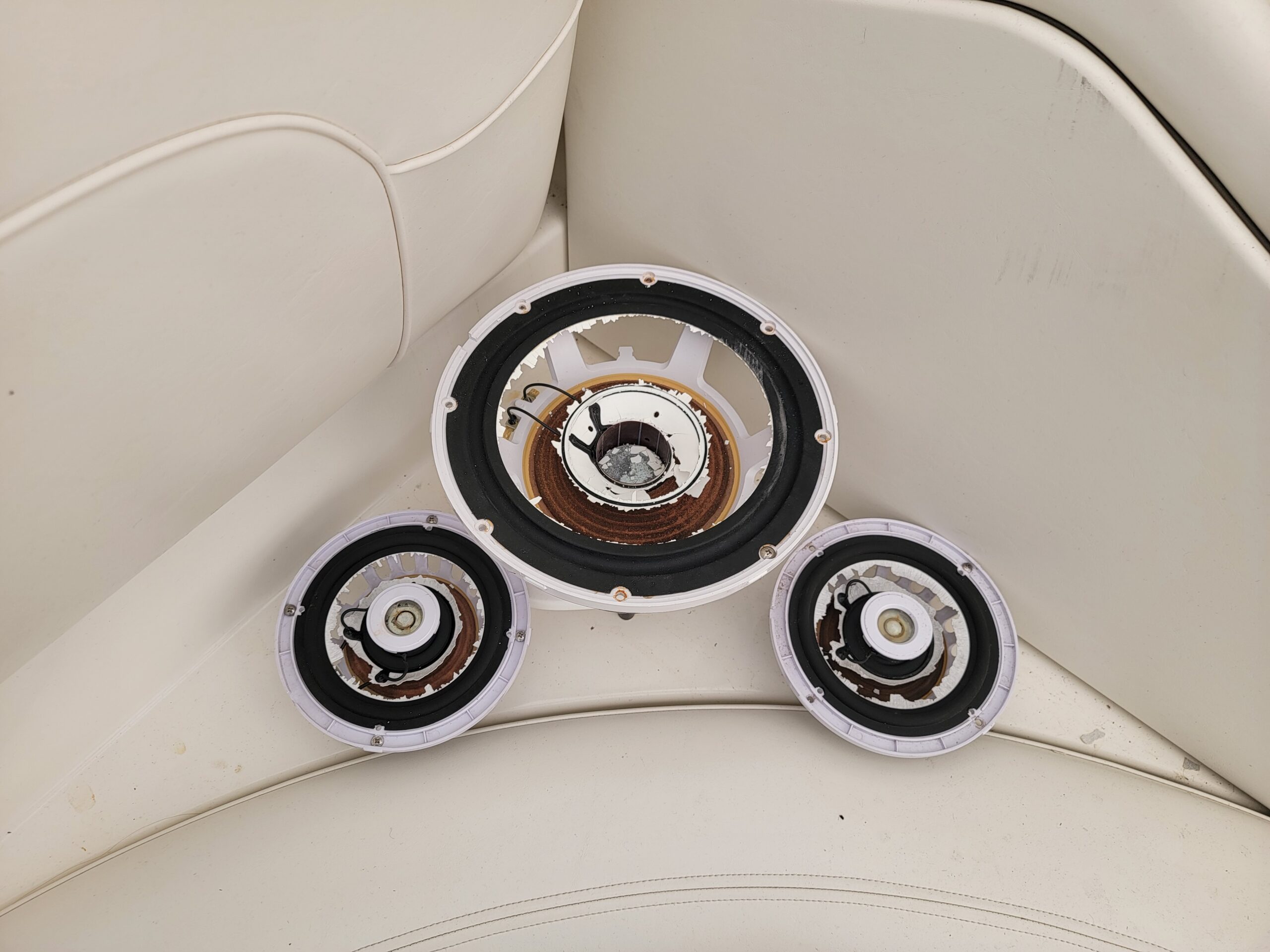
A car stereo sits inside a sealed cabin. A marine stereo lives at the helm — exposed to spray, UV, salt air, and vibration every single time you go out. Marine source units carry IP65 or IP67 waterproof ratings. Circuit boards are conformal coated against salt air corrosion. Speaker cones are UV-stabilized polypropylene rather than paper, and surrounds are butyl rubber rather than foam — foam disintegrates within a season or two on Long Island Sound. Mounting hardware is stainless or nylon, never bare steel.
LIME installs marine stereo systems using only marine-rated equipment. Every component is designed for the saltwater environment your boat lives in — no car audio substitutes.

System Layout
Speaker placement on your boat — how to cover the helm, cockpit, and bow.
Where speakers go determines how well you actually hear them. LIME plans speaker layout for your specific boat before recommending anything.
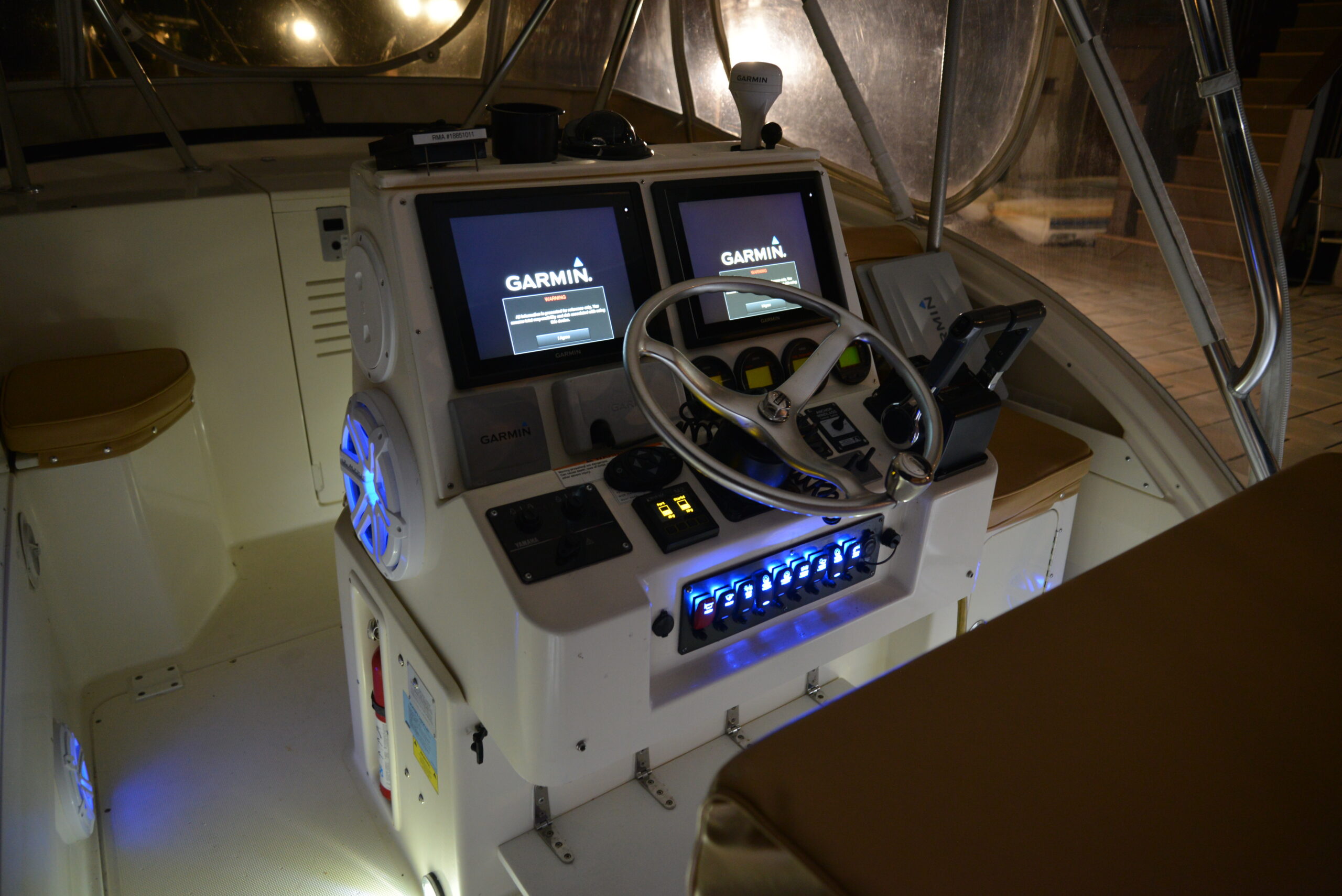
Helm speakers must compete with wind noise at 25-35 mph on Long Island Sound. LIME recommends 6.5 to 8-inch marine coaxials positioned to fire toward the operator. Cockpit speakers serve the seating area and benefit from an amplifier for extra headroom.
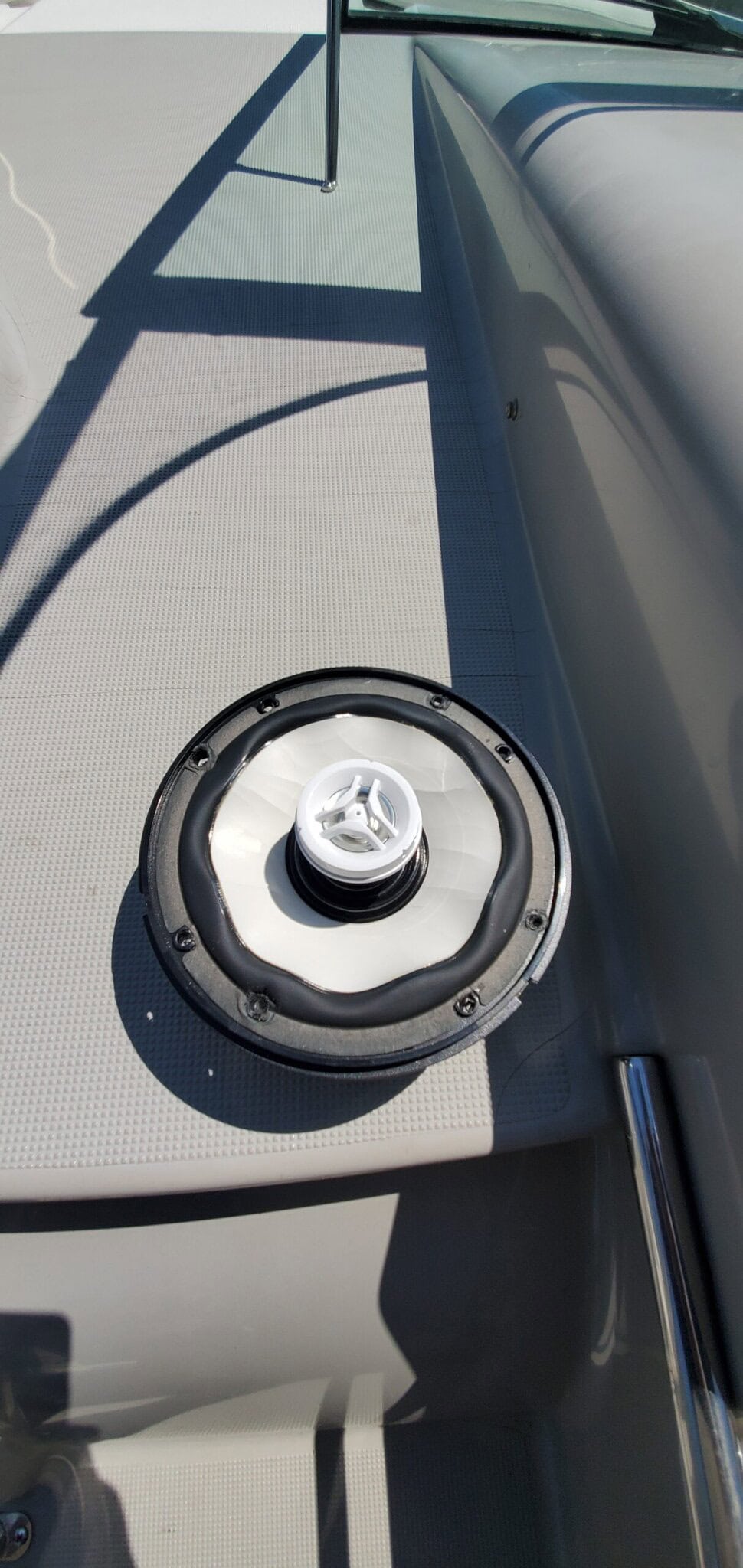
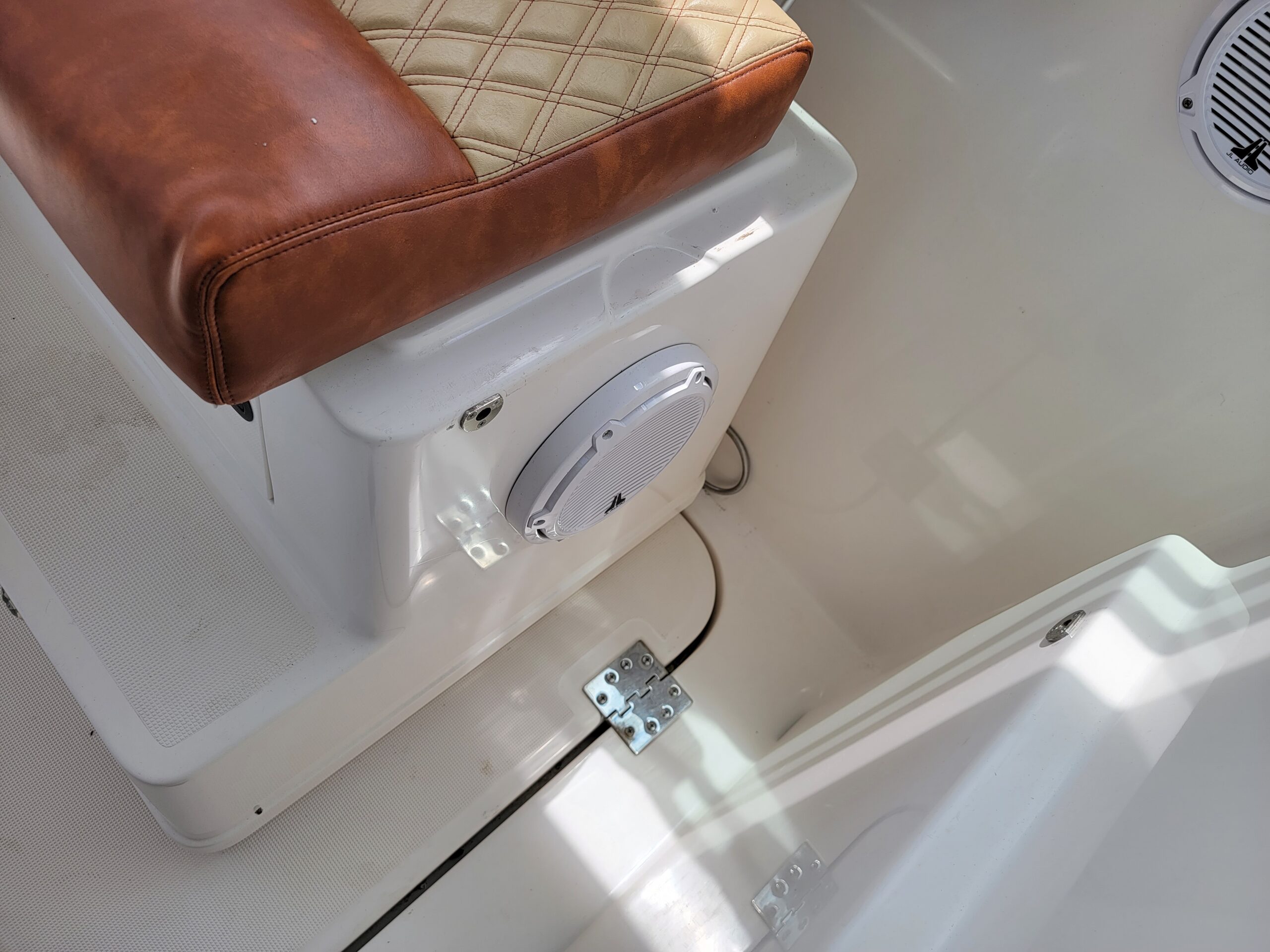
Bow speakers serve the anchor spot — when you shut down and everyone moves forward. A pair of 6.5-inch marine speakers in the bow gunnel keeps music going where the crowd is. LIME runs wiring forward clean and sealed against water intrusion.
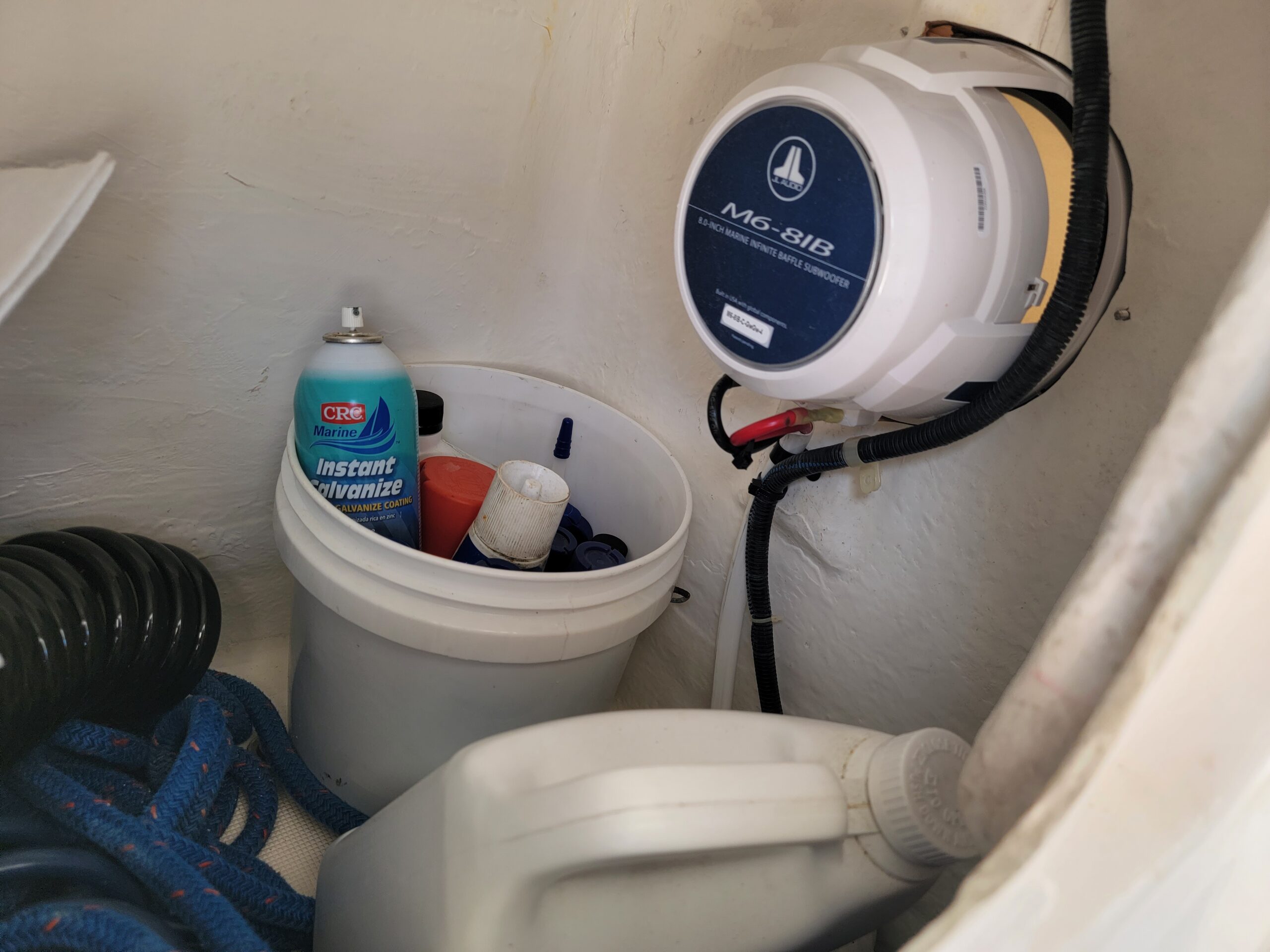
A marine subwoofer under a gunnel compartment adds bass that small speakers cannot produce. An amplifier is essential for any sub, and valuable on any boat at speed — the extra headroom lets speakers perform cleanly at volume. LIME sizes amps and subs for the total speaker load.
Ready to talk? Or keep reading below.
Clean Power & Wiring
Marine amplifiers and wiring — the part most installers get wrong.
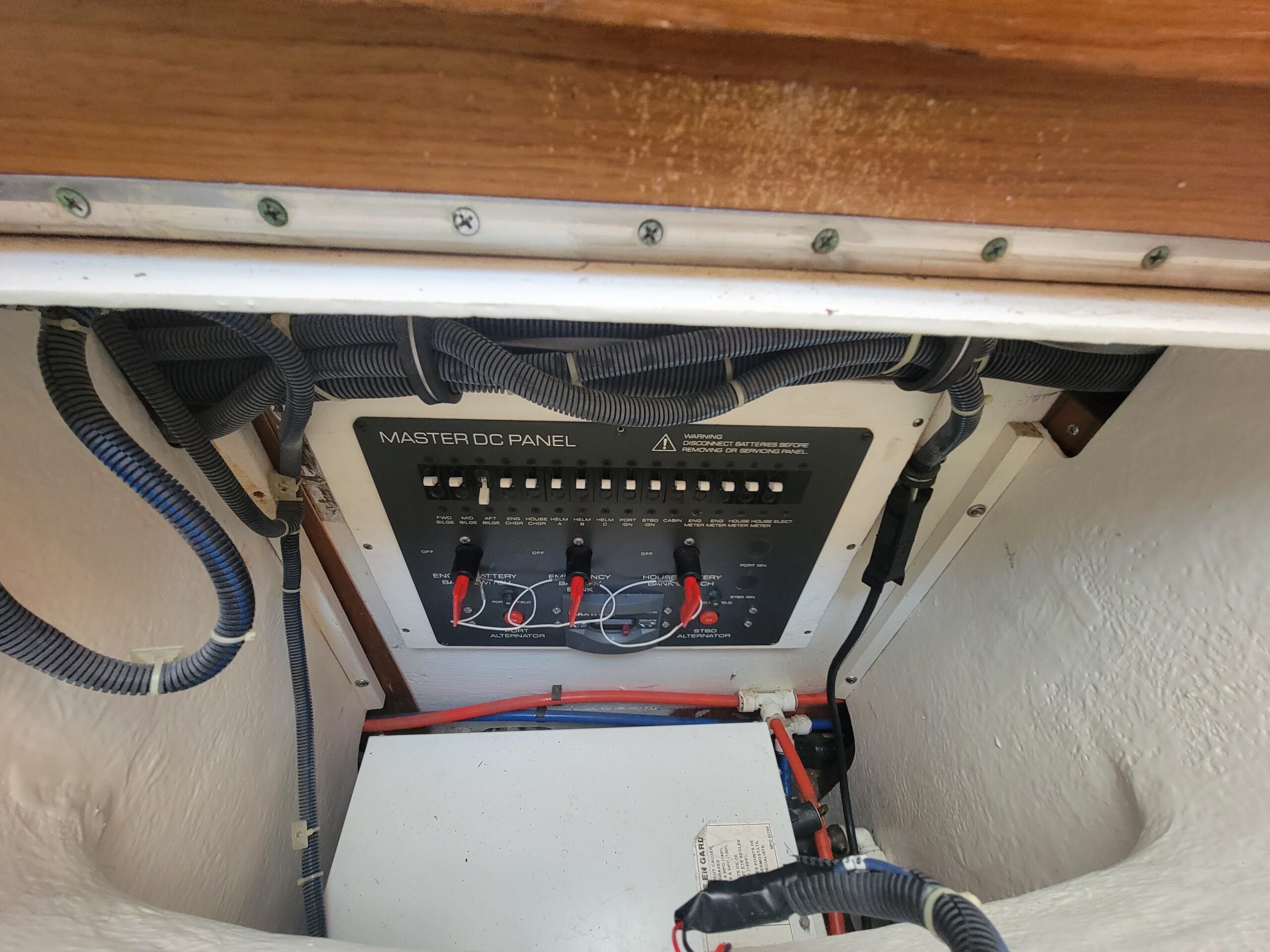
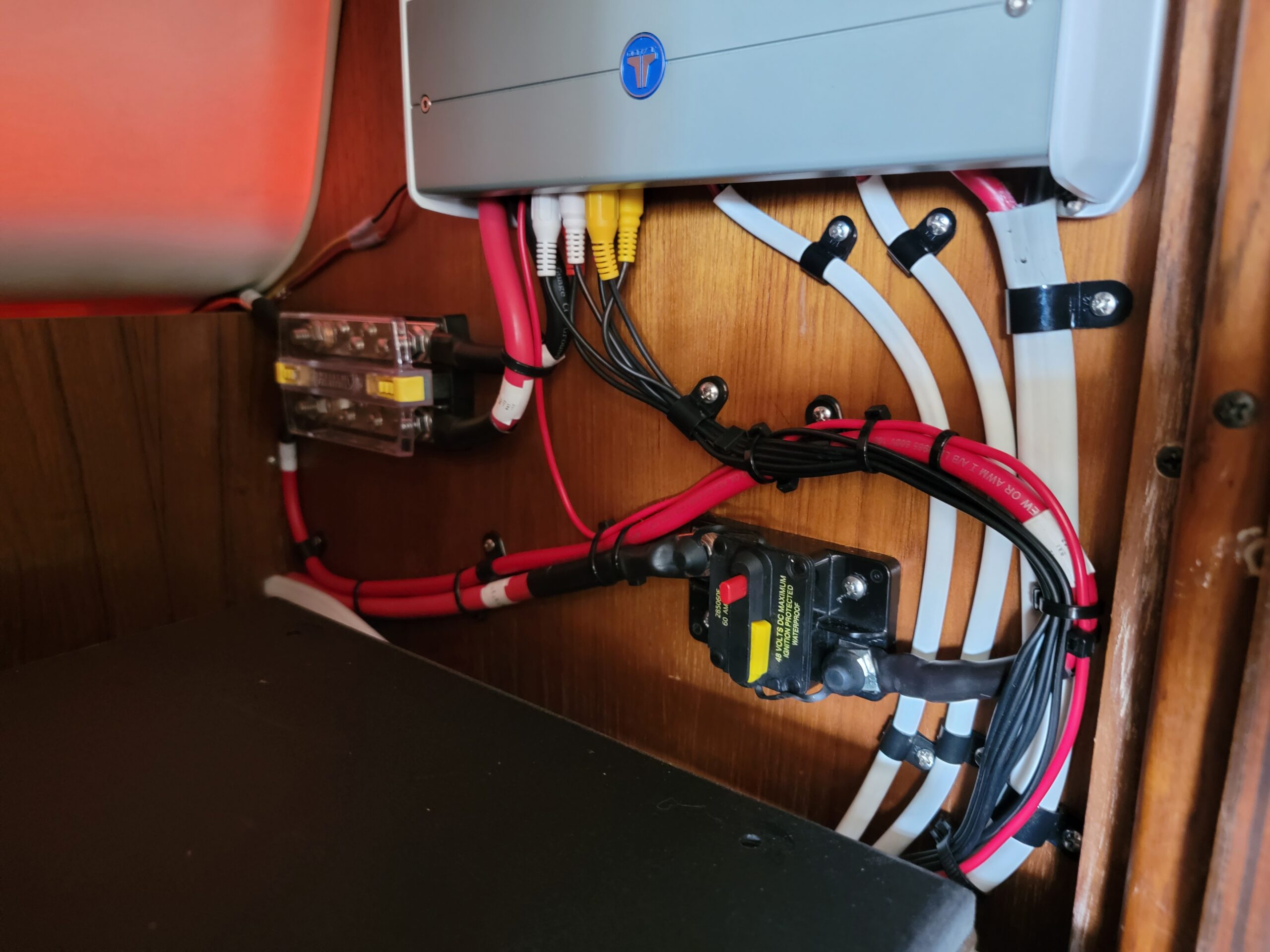
Marine wiring is not car wiring. Tinned copper wire is essential — bare copper oxidizes rapidly in saltwater, increasing resistance and eventually failing. LIME sizes every run correctly for the power draw of each amplifier, then fuses each circuit as close to the battery as practical. A fuse at the equipment end doesn't protect the wire run itself from a short. Bilge-safe routing keeps all cables away from water-prone areas.
- Tinned copper marine wire — not bare copper
- Correct wire gauge for each circuit
- Fuses located at the power source, not the equipment
- Marine-grade fuse holders rated for the current draw
- Cable runs routed away from bilge and water intrusion points
- Source unit waterproofed and positioned for easy operation at helm

Brands We Install
Marine audio brands LIME works with on Long Island.
Not every brand fits every boat or budget. LIME matches the system to what you actually need — loud enough, durable enough, priced right.
JL Audio M Series speakers and MX amplifiers are the top pick when sound quality is the priority. Built to marine IP ratings — UV-stable, salt-resistant, and built to last. LIME installs JL Audio on boats where the owner wants the best.
Fusion Apollo and Signature Series source units connect directly to Garmin and Simrad chartplotters via NMEA 2000, so you control music from your MFD screen. Best value per dollar in marine audio, and the ideal fit for boats already running Garmin or Simrad.
Wet Sounds builds the loudest marine audio available — IP67-rated, submersion-proof, engineered for open-air high-wind environments. If you run fast or anchor up with a crowd, Wet Sounds is the answer. LIME installs them on performance boats and any build where volume is the spec.
Why Long Island Boaters Trust LIME
Our Work
Recent marine stereo installations on Long Island.
Real jobs across Nassau and Suffolk County — clean wiring, weatherproof equipment, tested before we leave the dock.
5-Star Google Reviews
What Long Island boaters say about LIME's marine stereo work.
"Had LIME install a full JL Audio system on my 28-foot Pursuit — helm speakers, cockpit speakers, a sub under the gunnel, and a Fusion source unit. Everything sounds incredible even at 30 mph. Clean wiring, no rattles, no issues."
"Replaced my old blown speakers with Wet Sounds on my center console. LIME handled the whole job — ran new tinned wire, installed an amp, and mounted everything properly. Volume is completely different. Can actually hear music at speed now."
"Went with a Fusion system so it integrates with my Garmin chartplotter. LIME wired everything and set up the NMEA 2000 connection. Now I control the stereo from my GPS screen. Exactly what I wanted."
Common Questions
Frequently asked questions about marine stereo installation on Long Island.
What makes a marine stereo different from a car stereo?
Marine stereos carry IP65 or higher waterproof ratings, conformal-coated circuit boards, sealed enclosures, and corrosion-resistant connectors — none of which car stereos have. A car stereo installed on a boat will fail within one season in a saltwater environment like Long Island Sound.
Can I use regular speakers on my boat?
No. Marine speakers use UV-stabilized cones and rubber surrounds that hold up in humidity. Car speakers use paper cones and foam surrounds that degrade fast in a marine environment. LIME installs marine-rated speakers — JL Audio, Fusion, or Wet Sounds — and builds custom enclosures when needed.
How many speakers do I need for a 25-foot center console?
Four to six speakers is typical — two at the helm, two in the cockpit, and optionally two in the bow. A subwoofer under a gunnel adds bass without sacrificing storage. An amplifier is recommended for any system with a subwoofer or any boat running at speed where wind noise competes.
What brands do you install?
LIME installs JL Audio, Fusion, Wet Sounds, Clarion, and Kenwood. Wet Sounds for volume and IP67 ratings, JL Audio for sound quality, Fusion for NMEA 2000 integration with Garmin and Simrad. We match the brand to the boat and budget.
Can my marine stereo connect to Spotify or Apple Music?
Yes. Modern marine source units support Bluetooth streaming from your phone. Fusion units can also integrate with Garmin or Simrad chartplotters via NMEA 2000 so you control music from your MFD touchscreen. LIME wires everything accessible and waterproofed.
How much does marine stereo installation cost on Long Island?
A basic helm-only system starts around $600-800 in parts. A full cockpit and bow system with amplifier and subwoofer can run $2,000-4,000+ in equipment. Labor is $140/hr portal-to-portal, 4-hour minimum. LIME provides a written estimate before starting.
Get Started Today
Ready to upgrade your boat's audio on Long Island?
Call LIME for a written estimate. We size the system for your boat, install everything clean and weatherproof, and test it before we leave the dock. Nassau and Suffolk County.