
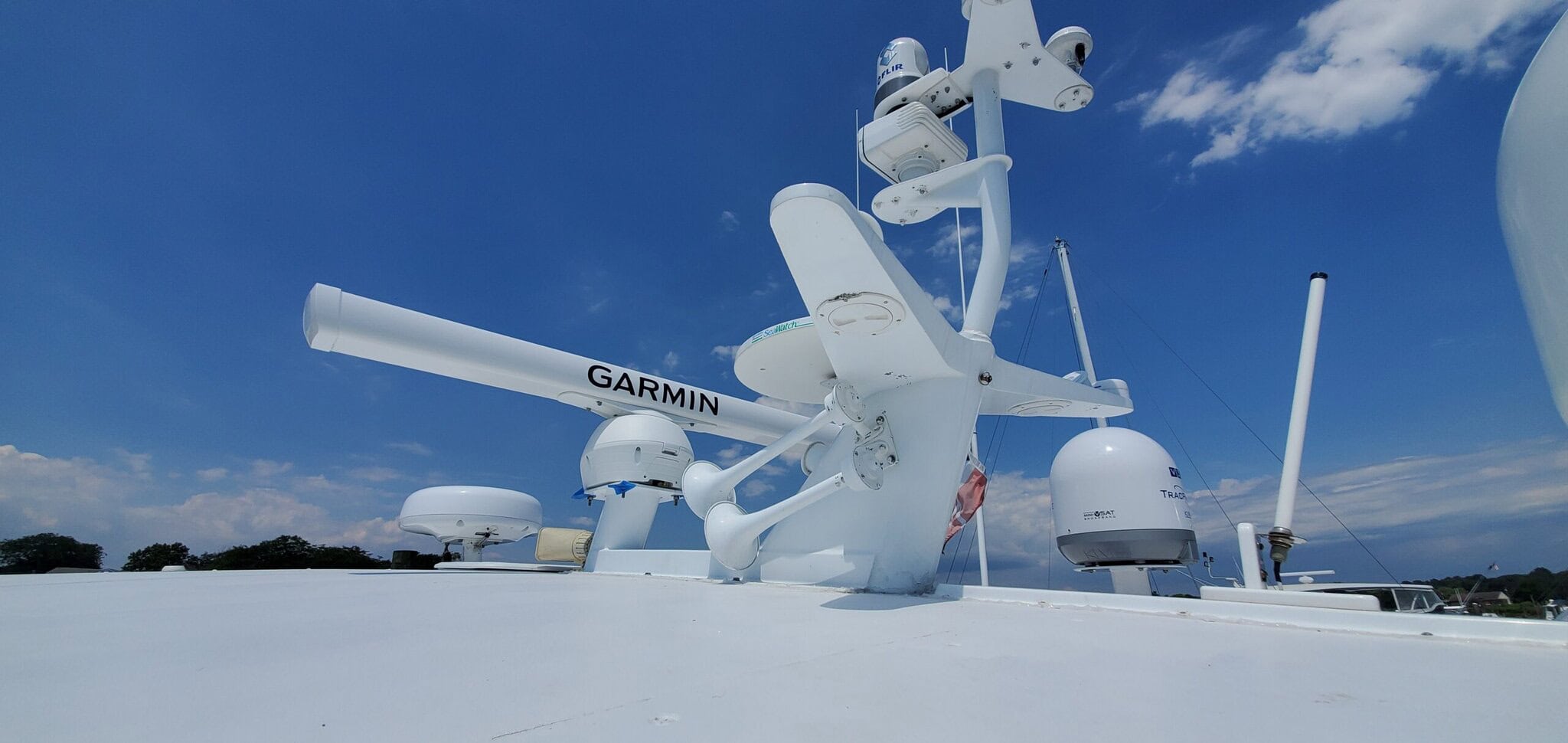
Marine Camera Installation on Long Island
See what is behind you when docking. See in the dark offshore. LIME installs marine cameras across Nassau and Suffolk County — stern cameras, bow cameras, night vision, and full chartplotter integration.
Whether you are backing into a tight slip in East Hampton or running offshore overnight, a properly installed marine camera changes what you can see and how safely you operate the boat. LIME wires every camera with marine-rated cable, clean routing, and proper weatherproof fittings.

Real Reasons Long Island Boaters Install Cameras
Why a marine camera installation changes how you operate your boat.
On a 30-foot-plus boat, backing into a slip without a stern camera is guesswork. You are judging distance to the dock, pilings, and other boats from the helm — where your sightlines end at the transom. A stern camera on the chartplotter display turns a stressful docking into a clean, confident maneuver. It is one of the most practical upgrades a boat owner can make.
Night visibility offshore is a different issue. Running to Block Island or back from a canyon trip means navigating in the dark — lobster pot buoys, debris, and other vessels are hard to spot. An infrared or thermal camera at the bow sees things your eyes cannot. And for documentation purposes — whether for insurance claims, fishing footage, or security while the boat sits at the dock — a recording camera system covers you.
Camera Options
Marine camera types LIME installs on Long Island boats.
Different use cases call for different cameras. LIME recommends the right type based on where you go, how you use the boat, and what you want to see.
Stern & Docking Camera
The most popular marine camera installation. Mounts at the transom or under the swim platform and sends a video feed to the helm display. Dramatically improves docking precision on boats over 25 feet. Waterproof, stainless mount, marine-rated cable run.

Night Vision & Thermal
Infrared cameras see in near-total darkness — useful for overnight offshore runs, anchor watch, and approaching unlit inlets. FLIR thermal cameras detect heat signatures regardless of light or weather, identifying other vessels, debris, and man-overboard situations that standard cameras miss.

Bow & Overhead Camera
Forward-facing cameras at the bow improve visibility when approaching tight inlets, navigating shallow water, or anchoring in unfamiliar spots. Overhead cameras at the T-top give a bird's-eye view of the foredeck and can feed directly to the helm chartplotter.

Display Integration
View your marine camera on your Garmin, Simrad, or Raymarine chartplotter.
Modern chartplotters are designed to accept video input. Garmin GPSMAP series, Simrad NSX and NSS displays, and Raymarine Axiom units all have video input ports — either composite (RCA) or IP network connections depending on the display generation. LIME verifies your exact display model before ordering any camera to ensure the cable type and video format are compatible.
The result is a stern camera view that pops up on your chartplotter when you put the boat in reverse — exactly like backup cameras in your truck, but marine-grade. You do not need a separate monitor at the helm unless you want one. LIME can also install dedicated displays for multi-camera systems where you want all views simultaneously.
- Compatible with Garmin GPSMAP and EchoMap displays
- Works with Simrad NSX, NSS, and GO series
- Raymarine Axiom and Axiom Pro video input supported
- Composite and IP camera options depending on display
- Can trigger automatically when in reverse

Ready to talk? Or keep reading below.
Recording & Documentation
Record camera footage on your boat — for insurance, fishing, and security.
A marine camera that only displays live video is useful. One that records is even better. LIME installs marine-grade DVR and NVR units alongside camera systems to capture continuous or motion-triggered footage. Storage to SD card works for single-camera setups. Multi-camera systems with internal hard drive storage give you hours of continuous recording from every angle.
Uses range from insurance documentation after an incident, to reviewing fishing footage for bait behavior and fish reactions, to security monitoring while your boat is at the dock between trips. LIME integrates the recording system cleanly with the rest of your electronics — no loose boxes or dangling cables.
Brands We Install
Marine camera brands LIME installs on Long Island boats.
We match camera to display and use case — not just whatever is cheapest. These are the brands LIME works with regularly.
FLIR Systems
FLIR makes the thermal imaging cameras used on coast guard vessels, commercial ships, and serious offshore boats. The FLIR M-Series and Duo cameras detect heat signatures in zero light conditions. For overnight offshore runs from Long Island, FLIR is the standard for man-overboard and collision avoidance.
Garmin Marine Cameras
Garmin's own camera line is designed to integrate directly with GPSMAP and EchoMap displays — no adapters, no compatibility guesswork. The GC 100 and GC 200 cameras use standard video input and can trigger automatically when the display detects reverse gear input.
Simrad / Lowrance / Raymarine
Simrad, Lowrance, and Raymarine all manufacture cameras designed for their own displays. LIME installs brand-matched cameras where possible for clean integration, and also installs third-party marine IP cameras where the display supports network video input.

Why Long Island Boaters Trust LIME
5-Star Google Reviews
What Long Island boaters say about LIME.
★★★★★ Tommy C.
"On time. Knowledgeable. Dependable. Reasonable."
★★★★★ Chavelli T.
"Dave and his team are professional, responsive and transparent. Couldn't ask for anything more. Working with them was great; the attention to detail and willingness to communicate and problem solve meant our project got done on time despite the short notice."
★★★★★ Frank S.
"I had my marine electronics installed by Dave and did a great job. I especially appreciated that the final price matched the estimate, no hidden costs. Had him come back a year later for assistance in updating software. Overall a great experience."
Common Questions
Frequently asked questions about marine camera installation on Long Island.
What types of cameras do you install on boats?LIME installs stern/transom cameras for docking assistance, bow cameras for visibility when approaching tight docks, night vision cameras for offshore overnight runs, and forward-facing cameras for general visibility. We also install fishing cameras, underwater cameras for viewing bait and structure, and full multi-camera systems with dedicated monitors or chartplotter integration.
LIME installs stern/transom cameras for docking assistance, bow cameras for visibility when approaching tight docks, night vision cameras for offshore overnight runs, and forward-facing cameras for general visibility. We also install fishing cameras, underwater cameras for viewing bait and structure, and full multi-camera systems with dedicated monitors or chartplotter integration.
Can I view my boat camera on my chartplotter?
Yes, if your chartplotter supports video input. Garmin GPSMAP, Simrad NSX and NSS, and Raymarine Axiom displays all support composite or IP camera feeds through their video input ports. LIME verifies compatibility and installs the correct camera and cable type for your specific display. Seeing your stern camera on the chartplotter screen while docking is one of the most useful upgrades a boat can have.
Do marine cameras work at night?
Yes, with the right camera. Standard color cameras with low-light modes work in well-lit harbor conditions. Dedicated night vision cameras (infrared or thermal) see in near-total darkness — useful for overnight offshore runs, anchor watch, and entry into unlit inlets. Thermal cameras like FLIR detect heat signatures regardless of light conditions, making them valuable for man-overboard situations and spotting other vessels. LIME installs all of these and can recommend the right camera for how you use the boat.
How are marine cameras wired?
Most marine cameras use a composite video cable (RCA) or IP network cable depending on the camera type, plus a 12V power wire. LIME runs cable from the camera through the hull, inside conduit where possible, to the display or recording device. Cable runs in engine spaces use marine-rated insulated wire with proper strain relief and weatherproof cable entry fittings at every penetration point.
Can I record camera footage on my boat?
Yes. A marine-grade DVR or NVR unit allows continuous or motion-triggered recording from one or more cameras. Some systems store footage to SD card, others to an internal hard drive. LIME can install a recording system alongside your camera installation — useful for insurance documentation, capturing fishing footage, or security while the boat is at dock.
How long does marine camera installation take?
A single stern camera with cable run to the helm takes two to three hours. A multi-camera system with DVR and chartplotter integration takes four to six hours or more depending on cable routing complexity. LIME charges $280 for the first hour (travel included), then $140/hr, and gives you fair pricing up front before starting any work.
Get Started Today
Ready to add a marine camera to your Long Island boat?
Call LIME for fair pricing up front. We match the right camera to your display, run the cable clean, and test everything before we leave. Nassau and Suffolk County.