
Marine solar power installation for Long Island boats.
We design, supply, and install solar charging systems on boats across Nassau County and Suffolk County — SunPower Maxeon panels, Victron and Mastervolt charge controllers, Xantrex inverter/chargers, and LiTime lithium batteries.
Solar keeps your house batteries topped off while you're at anchor, on the mooring, or away from the marina for days. No shore power. No generator running for hours just to recharge. Clean, quiet energy from panels you barely notice are there.

Equipment We Carry
Xantrex
Mastervolt
SunPower · Maxeon
LiTime
Solar Systems
Everything in a complete marine solar system — supplied and installed.
We supply and install complete systems using equipment we trust: Victron Energy and Mastervolt for charge control, Xantrex for inverter/charger integration, SunPower Maxeon for panels, and LiTime for lithium banks. You don't need to source anything — we bring it all.

The highest-efficiency solar cell on the market. 22–24% efficiency means more watts per square foot — critical on a boat where mounting space is limited. Backed by a 40-year performance warranty.
Victron SmartSolar and Mastervolt SCM series. MPPT extracts significantly more charging current than PWM and supports every battery chemistry. Bluetooth monitoring from your phone.
Xantrex Freedom SW and XC Pro series, and Mastervolt Mass Combi. Combines inverter, battery charger, and shore power transfer in one unit. Integrates with your solar system.
LiFePO4 drop-in replacements for AGM house banks. Lighter, longer cycle life, and compatible with MPPT controllers configured for lithium. We size the bank to match your solar input.
Victron BMV-712 and Mastervolt MasterView. Track state of charge, days of autonomy, charging history, and solar input. Know exactly what your system is doing from the helm or your phone.
Tinned marine wire, waterproof connectors, and properly rated fuses on every run. Wire gauge sized to actual current load. ABYC electrical standards throughout — no shortcuts.
Panel Types
Rigid, flexible, or foldable — which panel fits your boat?

22–24% efficiency — the highest available. More watts per square foot means fewer panels to hit your system target. 40-year degradation warranty. Aluminum frame, tempered glass, stainless mounting hardware we fabricate to fit your arch, hardtop, or T-top.
- Best for: hardtops, radar arches, T-tops
- Highest efficiency — most watts per sq ft
- 40-year performance warranty
Lightweight panels that bond to curved surfaces — bimini frames, cabin roofs, and deck areas where a framed panel won't sit flat. Lower profile, no visible frame or mounting hardware.
- Best for: bimini tops, curved cabin roofs
- Bonds with marine-grade adhesive
- No visible frame or mounting hardware
No permanent installation. A 100–200W foldable unit stores in a bag and deploys on deck at anchor. Ideal for weekend boaters who don't want permanent hardware, or as a supplement to an existing system.
- Best for: occasional use, supplement
- No drilling, no permanent mount
- 100–200W folding units available
System Sizing
How much solar does your boat actually need?

Daily amp-hour draw ÷ peak sun hours = panel amps needed. Long Island averages about 5 peak sun hours per day in summer. Multiply by 1.25 for losses.
Example: fridge, lights, VHF, and phone charging draw roughly 50Ah/day — about 150–200W of panel to stay even. Oversizing by 20% is cheap insurance.
| Use Profile | Daily Draw | Recommended Solar |
|---|---|---|
| Light — starting battery only | 5–15Ah | 50–100W |
| Weekend cruiser — fridge, lights, VHF | 40–60Ah | 150–250W |
| Extended anchoring — full electronics | 80–120Ah | 300–400W |
| Liveaboard / offshore — inverter, watermaker | 150–300Ah+ | 500W+ |
We do a full electrical audit before recommending any system — what draws power, how long it runs, and what your battery bank can store.
The Installation
What LIME handles from first look to final test.
Panel placement, shading, battery chemistry, charge profile, and wire sizing all matter. We handle every part of it.

We assess available mounting surface, shading from rigging throughout the day, cable routing paths, and your existing battery and charging setup before recommending anything.
Rigid Maxeon panels get fabricated stainless mounting hardware. Flexible panels bonded with marine adhesive and fasteners. All deck penetrations sealed with marine-grade sealant and cable glands.
Tinned marine wire routed through existing conduit or new runs we build. Fuse within 18 inches of the battery. All penetrations waterproofed. Wire sized to current load with safety margin.
Victron SmartSolar or Mastervolt MPPT mounted in a ventilated location. Charging profile configured for your battery chemistry. Xantrex or Mastervolt inverter/charger integrated if applicable.
Victron BMV or Mastervolt MasterView wired across the main shunt. Calibrated for your chemistry — LiTime LiFePO4, AGM, or flooded. Solar input and state of charge visible from the helm.
We verify output at the controller, confirm state of charge, and walk you through reading the monitor and apps. You leave knowing exactly what your system is doing.
Why Solar
Why Long Island boat owners are adding solar.

The marina charges by the foot. The generator burns $5/hr of fuel. Shore power isn't always available at a mooring field or anchorage. Solar solves all three. And with Maxeon panels producing more watts per square foot than anything else on the market, even smaller boats can run a meaningful system.
- Extended time at anchor without running the generator
- Healthier batteries — solar keeps AGM and lithium banks topped, reducing degradation
- Quieter, cleaner charging — no exhaust, no noise, no fuel cost
- Supplements your alternator — reduces engine run time just to charge the house bank
- Essential for LiTime LiFePO4 systems — maintains charge between engine runs
- Your batteries are full when you arrive — no warm-up charging before you leave
Customer Reviews
Five-star reviews from Long Island boat owners.

LIME installed a 300W Maxeon panel system with a Victron SmartSolar MPPT and BMV monitor on my Sea Ray. Wired clean, mounted solid, cables in existing conduit. Battery is fully charged every time I arrive at the boat. Excellent work.
Flexible panels bonded to my bimini top and a Mastervolt charge controller wired to the house bank. Done in one day, cables hidden inside the frame. Three weeks at anchor over the summer — generator ran maybe twice. Exactly what I wanted.
Full system — Maxeon panels, Xantrex inverter/charger, LiTime lithium bank, and Victron BMV monitor. Everything works together perfectly. Best upgrade I've ever made to the boat.
Our Work
Recent marine solar installations on Long Island.
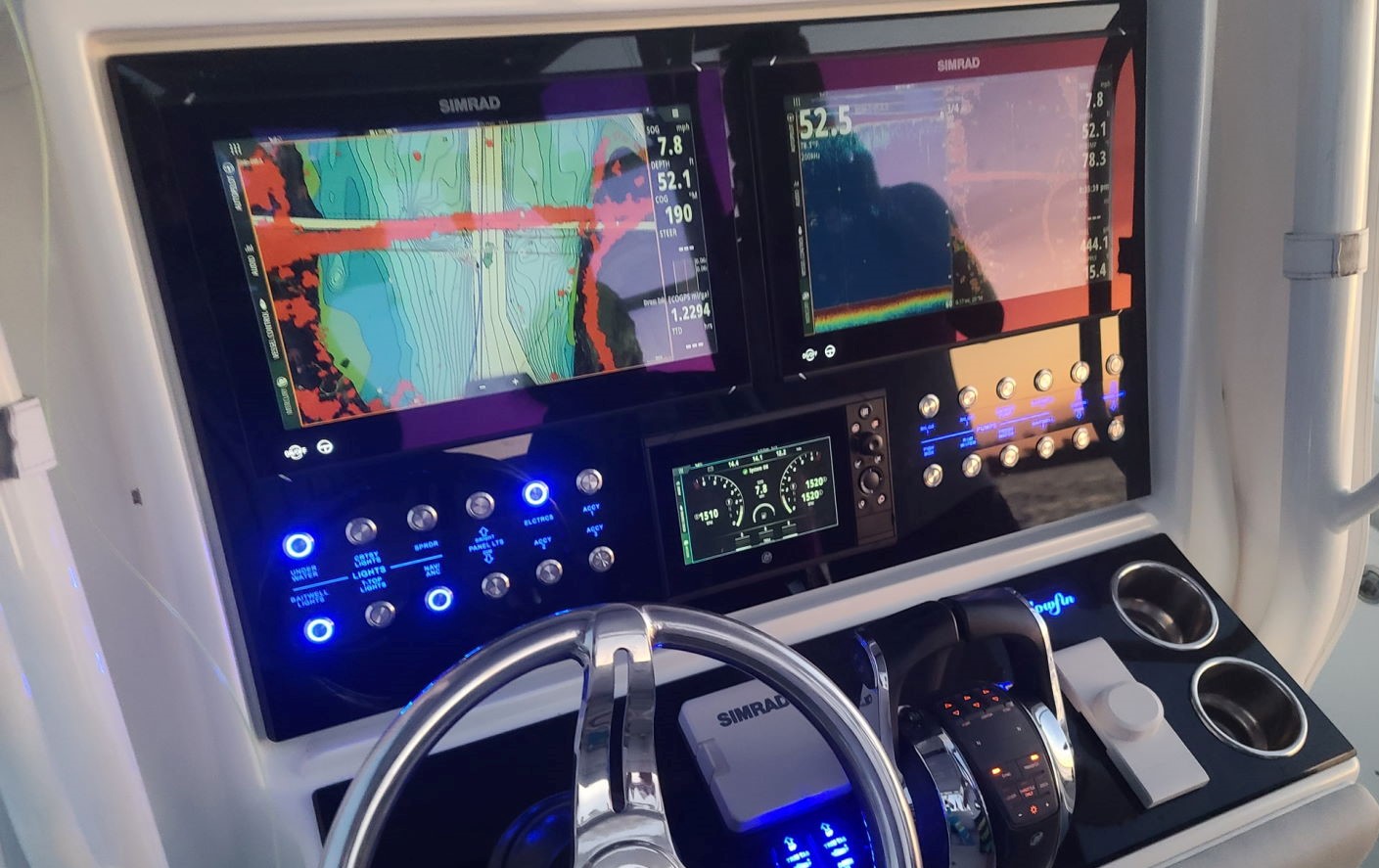
Real jobs across Nassau and Suffolk County — panels, controllers, and batteries installed right.
Logo
Abyc Certificate
Nmea Logo
Dash Panel Hero
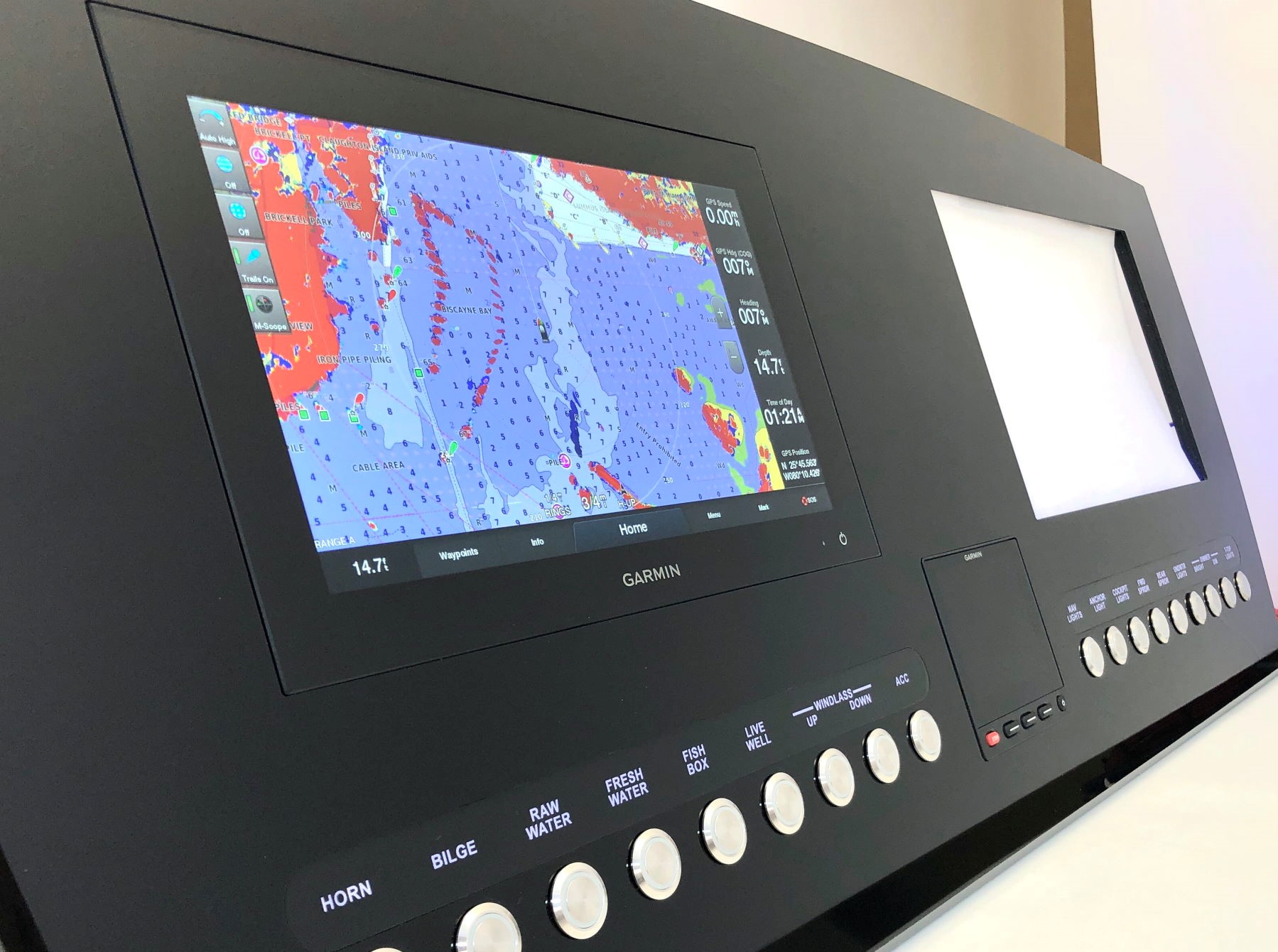
Dash Panel Garmin
Common Questions
Frequently asked questions
How much solar do I actually need?
It depends on your daily amp-hour draw. A weekend cruiser running a fridge, lights, and VHF uses 40–60Ah per day — roughly 150–250W of Maxeon panel to stay even on a summer day. We do an electrical audit before recommending any system so sizing is based on your actual use, not a guess.
Why Maxeon panels instead of standard panels?
Maxeon cells produce more watts per square foot than any other panel on the market — 22–24% efficiency vs 18–20% for standard monocrystalline. On a boat where mounting space is limited, that difference matters. Maxeon panels are backed by a 40-year performance warranty and degrade less than 0.2% per year.
What is the difference between Victron and Mastervolt?
Both are excellent European marine power brands. Victron has outstanding Bluetooth monitoring and integrates well with their Cerbo GX display systems. Mastervolt integrates well with their own inverter/charger lineup and is common on larger yachts. We install both and recommend the better fit for your system.
Where does Xantrex fit in a solar system?
Xantrex makes the inverter/charger — the unit that combines a DC-to-AC inverter, a battery charger for shore power, and a transfer switch in one box. The Xantrex Freedom SW and XC Pro work alongside your MPPT controller so solar, shore power, and any generator all charge the bank in the right order.
Are LiTime lithium batteries worth it?
For most cruising boats, yes. LiTime LiFePO4 batteries are a drop-in replacement for AGM — significantly lighter, longer cycle life (2,000–3,000 cycles vs 300–500 for AGM), and can be discharged to 20% without damage. The main requirement is a charge controller configured for lithium — standard on every Victron and Mastervolt MPPT we install.
Do you supply all the equipment?
Yes — we supply SunPower Maxeon panels, Victron or Mastervolt controllers and monitors, Xantrex or Mastervolt inverter/chargers, LiTime batteries, and all wiring and hardware. If you have already purchased equipment, we can work with it after reviewing the spec sheet.
How long does a solar installation take?
A single-panel system with a charge controller and monitor typically takes 4–6 hours. A full system with custom Maxeon panel mounting, Xantrex inverter/charger, LiTime lithium bank, and Victron monitoring can take a full day. Portal-to-portal at $140/hr with a 4-hour minimum. Written estimate before we start.
Get Started
Ready to add solar to your boat?
NMEA certified. ABYC electrical standards. Serving Nassau County and Suffolk County marinas.
Portal-to-portal billing · 4-hour minimum · Written estimate before we start